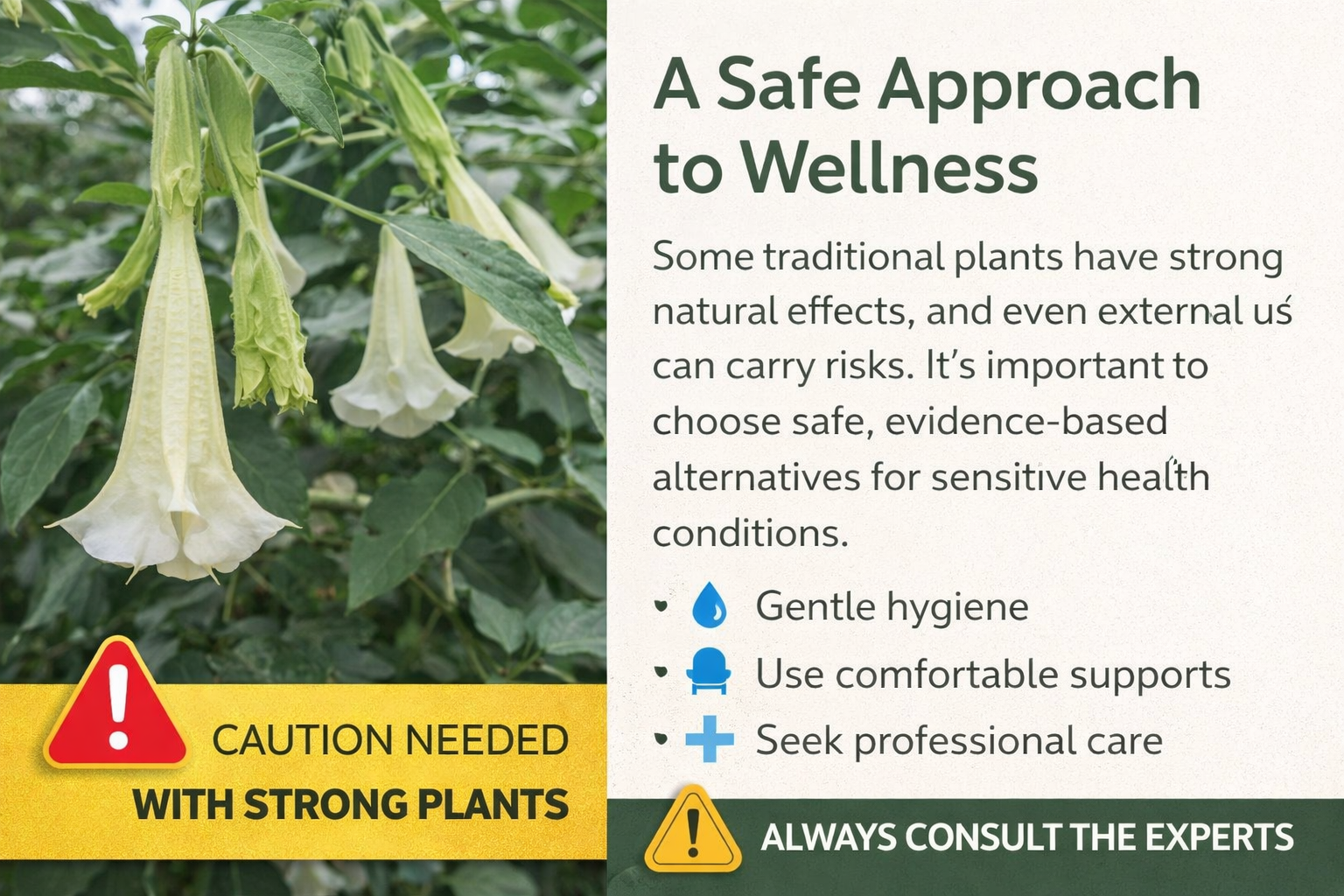
A Cautious Look at Traditional Plant Remedies: Safety First in Everyday Wellness
Across different cultures, plant-based practices have been passed down as part of traditional care routines. Some plants are recognized for their strong biological effects and have been used externally in specific contexts. However, it is essential to approach such remedies with care, especially when dealing with plants known to contain potent active compounds. Not every traditional method is safe for general use, and understanding the risks is just as important as understanding the potential benefits.
Certain plants, including those from the Brugmansia family, contain naturally occurring substances that can influence the nervous system. These compounds are studied for their pharmacological effects, but they are also associated with significant safety concerns. Because of their strength, even minimal exposure—whether through contact, inhalation, or accidental ingestion—can carry risks if not handled properly. For this reason, these plants are generally not recommended for home remedies or unsupervised use.
When dealing with sensitive health conditions, it is safer to rely on well-established and medically approved approaches. Gentle hygiene practices, maintaining comfort in the affected area, and seeking professional medical advice are more reliable ways to manage discomfort. Healthcare providers can offer guidance tailored to individual needs, helping to avoid complications and ensuring that any treatment is both appropriate and safe.
Traditional knowledge can offer interesting insights, but it should always be balanced with modern understanding and responsibility. Choosing safe, evidence-based care helps protect your health and well-being in the long term. When in doubt, prioritizing caution and consulting a qualified professional is the most dependable path toward relief and recovery.